Thursday, 23 November 2017


Show me a poet who writes the Sonnet 

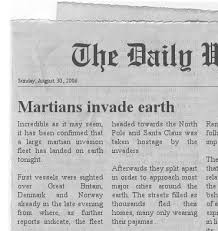
 “Poetry is emotion put into measure. The emotion must come by nature, but the measure can be acquired by art.” — Thomas Hardy, as quoted in The Later Years of Thomas Hardy by Florence Hardy. Having said this brings us to the final lecture presented this week, the Amazing genre of poetry. The session was very interesting, fun and interactive, we felt as though we were part of the presentation.  The lecture began by showing us two poems from a textbook, Bridging English. In this way we were able to see their structure and make comparisons. The first one she read was short, although they were about the same story. We recognized however that the one which was more of a newspaper article was longer.Image result for news article poem examples A question was posed after, asking us to relate what had happened in both stories. One of our classmates was unable to respond. This however was a reminder that there would be these types of students in our class.
As we delved further, the lecture asked us to give a definition of what was a poem. Some answers given were close to that of what was presented. However, this was defined as a creative piece like no other. A poet combines creative , descriptive, persuasive and imaginative  forms to produce a piece which is as unique as a finger print. It was noted further that poet is the person writing the poem, and the genre is poetry. We learned that poetry can also be defined by the elements which are specific to its genre. Some of which are; Figurative devices-poetry utilizes all the figures of speech/figurative devices such as similes,Image result for image of figurative language metaphors, personification, alliteration and assonance, Radiant imagery-poetry contains images (the use of words to paint pictures in the reader’s mind). An example given was the phrase, “pregnant clouds” which is an image from the poem “African Thunderstorm by David Rubadiri

Moreover, the fact that stood out to us was made mention that -  children often come to the classroom with misconceptions about poetry. Therefore, this is an indication that we should never assume that a child knows. It brings us back to the point that we should always model or show to our students examples before teaching them a concept. Also, they may perceive poems as boring and hard to write. Therefore, what does this mean to us as teachers ? Image result for question emoji faceIt means that when teaching poem allow them to choose their topics to write about, Let students know that poems are songs with the tune, poets create poems to express and share their feelings,the rules of punctuation and sentence length are not the same for poems as with proseexpose them to a type/ types of poetry and  let them examine the characteristics, ensure you teach the figurative devices if students don’t know them, go through the poem with students first, discussing the words or terms with which they are unfamiliar, then discuss the poem line by line. Encourage children to participate, make connections with what they are reading and their own lives. Additionally, another strategy that can be utilized was that of using what was called,  'My Poet Tree,' Image result for my 'poet tree'this aids students understanding of the concept much easier. It shows the characteristics of what a poem should entail. Lastly, allow them to work collaboratively for their first attempts, allow students to brainstorm, produce drafts, revise and edit their pieces, use technology, the internet is  filled with resources for you as the teacher and examples of poems for the students. Therefore let them publish their pieces in author’s/poet’s chair, display them in the classroom, create a book of poems, post them online, have a poetry reading etc.

It was further established that there are different types of poem, just to name a few, there is the cinquain, five sentence poem in which the final word of each alternating line rhymes, sonnet, a fourteen line poem in which every other line rhymes (abab pattern) and the final two lines (a couplet : aa) rhyme. Following this we were then asked to write on different types of poems. We were instructed to writeImage result for image of a poet the five liners and the bio poem. This was fun as we took turns listening to what each other had to say. We realized by our expressions that we were different. This also is an indicator of the diverse students that we are going to encounter in the classrooms.

In concluding, we think that the lecture presented was very enlightening, modeling to us what a good poetry should look and sound like can now aid us in writing our poetic piece for this journal. In some instances where students may forget, these models maybe useful for referencing purposes.


Tuesday, 14 November 2017

10th November, 2017.

Image result for the words king author with a crown


King Author

Over the past few weeks, we have been focusing on the different genres of writing that students must be engaged in, what they entailed, how they should be thought and activities that teachers can utilize to aid students in remembering how various types of writing should be done. During this week's sessions, we continued  looking at narrative writing. As trainee teachers, it is pivotal that we understand what is narrative writing, what it entails and how it should be taught before we enter the classroom. We had some prior knowledge about what narrative writing entails, therefore these lectures was almost a ‘walk in the park’ for us. Further into the sessions there were some responses from some of our classmates, stating that they remembered some of the content presented. This was an indication that the information previously learnt was coming back to their minds. Although we had a foundation, we were now receiving materials that aided in the building of the house. Therefore, after these sessions our understanding had deepened to that of grasping what was narrative writing.Image result for images depicting understanding narrative writing

Moreover we discovered that in teaching narrative writing the teacher must provide models for the students to view. This can be done in the form of reading to them,and by providing their own copies so that you can read along aloud. This can be either an interactive read aloud or whole class reading. Image result for teacher reading aloud to studentsStudents will never know what a good piece of Persuasive writing sounds like if samples are not given to them. It is solely the duty of the teacher to provide samples for the students. In the session on Thursday to begin the class the lecturer read a narrative piece to us. The story was very fascinating and interesting and as she read we listened attentively. By the questions posed by the lecturer, it was evident that my classmates were totally involved in the lesson by their responses. At this point we thought to ourselves, if this sample stimulated us as adults, just imagine the buzz and zest our students would possess if we as teachers read samples of narratives stories to them.Image result for children fascinated from teacher reading Additionally, as the lecture went further the sample was of great help not only to the lecturer but also to us students. This was so because the lecture was able to reference to the story by having us identify what narrative writing should include after they were taught. Therefore, we saw that samples were important when teaching narrative writing. We observed that the job of the lecture was made easier because as she taught an aspect of narrative writing, she related back to the sample which made our understanding clearer. Similarly when we enter the classroom we will provide samples of narrative writing for our students. This will aid them in understanding the elements of narrative writing as well as writing a good narrative piece.

Furthermore it was established that narrative writing must be taught and that we should not make any assumptions that students already know. Often times we as teachers enter the classroom and think students should already have a basic knowledge from a previous class. Hence the reason narrative writing should be taught in-depth. The question must then be asked why it is mandatory on the curriculum for that class?Image result for question emoji face It simple means that it should be taught. It is not our duty to consider whether or not a previous teacher has taught the students narrative writing before but our job is to ensure that we teach narrative writing to the students. As teachers we should only give account of what we have taught. How can we allow our students to engage in narrative writing when we have never taught it to them? This can be very unfair to the students, Furthermore, students cannot learn about characters, setting, plot, themes,narrative devices and point of view if we do not aid them effectively.  This means that on entering the classrooms, we should teach thoroughly without making assumptions that our students already know what is to be taught about narrative writing. If we believe they have some previous knowledge we should question them prior commencing the lesson and if they already do then their understanding can be deepened.
Also, at times students might forget what should be done when they are engaging in narrative writing, especially if they did the other genres of writing before they did narrative writing. This means that we should ensure students grasp the content of narrative writing. They should not stray from what is to be done. In light of this, the activity that stood out to us which can aid students in remembering what narrative writing entails is the story map activity. This map can be used after the lesson or after students have written their own narrative pieces. It acts as a constant reminder as to what should be in the narrative piece.


In concluding this reflection, we think that some of the fonts on some of the slides were too small, which made it somewhat difficult to read. Therefore for future Lectures we think the size of these fonts can be increased and in doing so students can easily see what are on these slides.

Tuesday, 7 November 2017

Reflection 6
november , 9-10 , 2017
Technigration


During this week we focused on two (2) different aspects. Firstly, we looked at integrating technology into writing. As the lecture advanced we realized that the usage of technology is important in advancing and improving students writing. We never viewed technology in this spectrum but as we reflected on our progress with this assignment we could not deny the fact. Secondly, we looked at persuasive writing, what it was, what it entails and how it can be  introduced and taught in the classroom. This made the sessions for this week enlightening, educational and refreshing . As trainee teachers, it is pivotal that we retain such information and use them effectively in aiding our students in becoming better writers and overall competent students of the language.Image result for children using technology image in the classroom


Moreover children work collaboratively when technology is used in the classroom to advance writing. As mentioned previously we had our own experiences in the writing of these reflections for this course. Due to the fact that each group member has an individual voice we keep revising and editing each other's work continually via the use of technology. Therefore without recognizing it we are working together to ensure that the finish product is of the best quality. Similarly students will work together an assist each other, Image result for elementary students helping others in technology use imagethose students who are more advanced can assist those who are slow in using the technology in aiding their writing. For instance, how to backspace, enter, indent and space just to name a few. Therefore as the students work together using technology,social interactions are fostered because they have to communicate with each other as we usually do when we are writing up our reflections.
Technology must be used in the classroom to complement the lesson and not to teach the lesson. We agree that technology within the classroom is very important. We are living in a technological era and our students embrace technology, they are born into technology. Therefore, using what they love to enhance learning is certainly not a bad initiative. However, any form of technology used in the classroom must aid in the delivery of the lesson. Often times teachers use technology within the classroom with little to no explanation of what the technology is highlighting. As teachers in training we understand that we must always explain what is been taught to our students.Image result for teacher explaining to students in the classroom In order for them to comprehend effectively they must be taught. For example, projecting a sample of a persuasive writing using a projector and a laptop, then instructing students to write their own after without emphasizing what the technology was advocating is not a good initiative. Therefore we pledge to use technology effectively in our classrooms to advance the writing of our students, on a larger scale in any subject area.
Furthermore, as teachers it is important the we model to our students how persuasive writingImage result for example of persuasive writing of elementary students should be formulated. As teachers we must never assume that our students know and mark their work base on what we think they know. This is not right, as teachers we understand that we must only account for what we teach. Therefore we must not allow our students to engage in writing unaware of what they are writing about. When writing persuasive pieces students must utilize rhetorical devices of which there is a set structure. How can students be knowledgeable of this if we do not teach it to them ?Image result for question emoji face As teachers in training we are aware of what is happening in some classrooms pertaining to writing because of our experiences with writing. Therefore we will make the difference when we enter the classrooms. Again, we emphasize that persuasive writing must be taught if students are to become competent or close to competent at writing persuasive pieces.


In addition the main aim of persuasive writing is to convince and appeal to the emotions of the audience.Image result for emotions of audience images At times students may forget this and stray when writing persuasive pieces however one (1) activity that stood us to us which can aid students in remembering what persuasive writing entails is the oreo opinion writing activity. In this activity each letter in oreo emphasises persuasive writing. Therefore the activity emphasises what a piece of persuasive writing should entail. We believe that in using this activity the actual oreos should be brought  to the classroom and distributed to students while the teacher explains why they are using the oreos.
Students are more likely to remember what was taught because the teacher used material that they are familiar with and moreso what they liked.


In concluding this reflection we think that  a model of a piece of Persuasive writing should have been placed in the lecture. This would be refreshing to the students because as the lecturer explained they can easily follow and identify what is being thought. Additionally, since it is a part of our assignment to write a Persuasive piece for our portfolios students could have easily viewed this model if they got lost in their writing.